There was a past master in the Buddhist tradition, a great master of the ancient University of Nalanda, which is very famous in the Mahayana Buddhism, and whose texts are extensively studied in the Tibetan tradition, especially with respect to his commentaries on Madhyamika as taught by Nagarjuna, whose name is Chandrakirti. In his text, and also in his own self-commentary on the Fundamental Wisdom, he expressed a very concise explanation about morality.
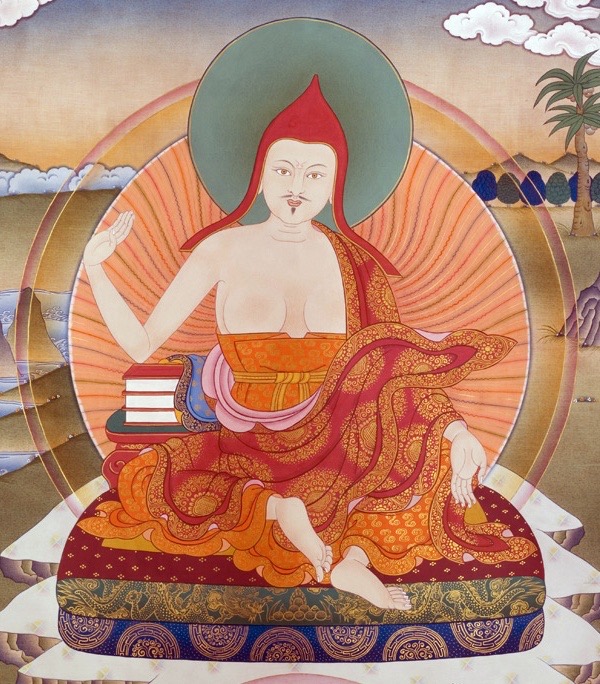
What he described is that, when we speak about corrupted morality, there are two types. One is when you act in a way that directly harms others, or when you have taken certain vows to behave in a particular manner and you break those vows. But he also defined another kind of corrupted morality, which is when, even if you perfectly follow the rules, your vows, and you do your best to follow those moral schemes , your mind is still grasping — obsessively clinging to that factor of morality. In other words it becomes a clinging induced by the Ego.
I have reflected on this many times, trying to catch its meaning in the most practical way and I thought that the very essence of this that also I found in the explanation that Peter Kropotkin gives about the sense of morality. There we can find the key point to faultless or genuine morality , the main ingredient.
First of all who was Peter Kropotkin ?
Peter Kropotkin (1842–1921) was a Russian geographer, biologist, political philosopher, and anarchist.
And even if Anarchist and Religions look be antagonist, actually have very similar goals and not contradictory points in terms of achievements .
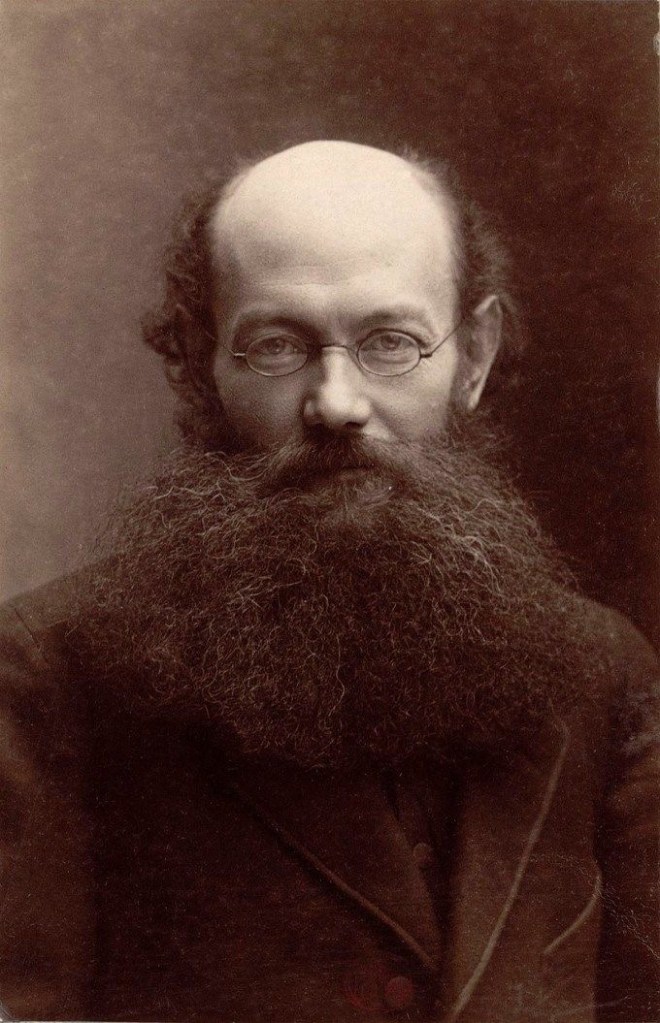
Peter Kropotkin’s theory of anarchist morality posits that morality is an innate, instinctive part of human nature rooted in mutual aid and solidarity, not in religious or state-imposed ethics and he speaks about mutual aid as a factor of Evolution and as basis of morality .
The way he describes it is that when we speak about morality, it is not so much what is taught to you at school, by the government, by society, or even by religions themselves. Rather, it is that innate feeling that everybody has, that when you act in a certain way, it causes suffering to others — it harms someone. That innate feeling is what true morality really is.
And I agree with that, because if this innate feeling does not manifest, if it is not nourished, then whatever morality is told to us will never become real morality, contrarily, it can become easily a tool to build superstitions, manipulate or to use power in a malevolence manner or to live in fear.
Morality itself is not simply the rule — it is the very essence of acting in an harmonious and genuine way that does not harm others. And it exists within the understanding that “my freedom stops where the freedom of another person begins”, and vice versa.
Often is considered as just a religious factor or somethings concerning rules or martial arts .
In Sanskrit is called śīla (शील) , it means “fresh” in the sense that practicing morality brings a sense of freshness, as if you are no longer carrying a heavy burden.
Peter Kropotkin
Peter Kropotkin’s theory of anarchist morality posits that morality is an innate, instinctive part of human nature rooted in mutual aid and solidarity, not in religious or state-imposed ethics and he speaks about mutual aid as a factor of Evolution and as basis of morality .
The sense of morality, awakened and cultivated, is extremely important today. Morality is not just about how humans interact with one another; it also encompasses respect for other living beings and, especially, for the environment. Our planet needs our attention, protection, and care.

We are losing touch with the Earth. Our reality, shaped by highly complex systems and mathematical constructions, increasingly distances us from the natural connection we once had with this planet and its environment. This detachment also weakens our sense of morality, which many tend to view merely as a religious value or even as something superstitious that limits freedom. In truth, it is morality that brings freedom.
Even anarchists, who fight for freedom, base their vision on respecting the freedom of others — on not causing harm to anyone. This principle is rooted in the innate morality we all possess, and it is a morality that must be nurtured. But if at the foundation there is no sense of compassion and empathy, no morality can truly stand.
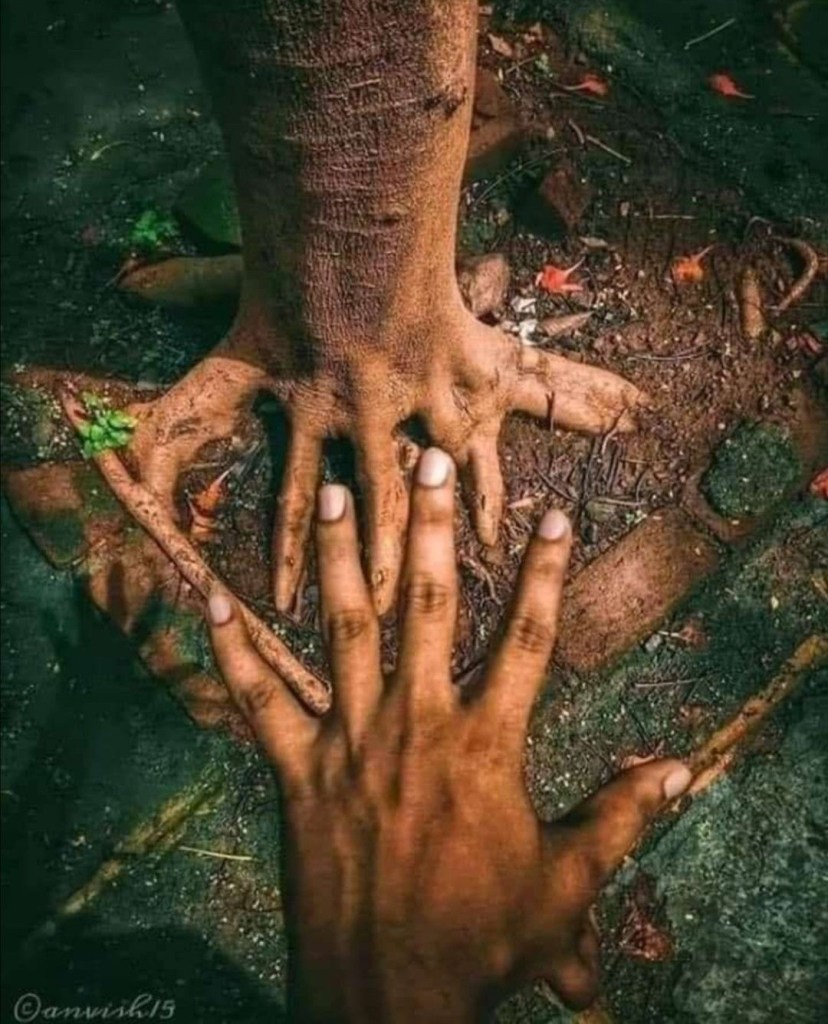
Unfortunately, we often fail to recognize this and continue to tread carelessly on our planet. New generations, however, are much more sensitive to these issues. Their minds are quicker, more perceptive, and more attuned to the challenges we face. My message is for them: they are our hope. It is they who can break free from the destructive logic of the older generations and help build a better world, one founded on values that are more genuine and life-affirming.
It is also crucial that modern societies listen more to these young people. Our current knowledge tools are very limited compared to their potential. What we can do is support them in finding the right tools, nurtured with these values — values that are no longer taught in schools today. Education is largely designed to prepare individuals for the workforce.

But as human beings, human values themselves should become part of the learning process. These values should be formally present in schools and education, so that individuals can express them naturally, rather than suppressing them — which is the mistake we make today. By nurturing these innate values, we allow them to truly manifest, rather than being constrained by an education system focused solely on utilitarian outcomes.
Lobsang Kunsang,
28 September 2025, Dharamsala, India
 Manjushri spoke to the Elves